Dragon Quest III
About This Game
Dragon Quest III is one of the most influential role-playing games of the 8-bit era and a major milestone in the history of console RPGs. Originally released in Japan in 1988 for the Nintendo Family Computer, the game expanded the ideas established by the first two Dragon Quest titles into a much larger adventure. It introduced a more flexible party system, a broad world to explore, a memorable class system, and a story that connected the game to the wider Dragon Quest mythology in a particularly clever way. The NES version released in North America was known as Dragon Warrior III, making it one of the most important entries in the early Dragon Warrior lineup.
The adventure begins on the hero's sixteenth birthday. The protagonist is the child of the legendary warrior Ortega, who disappeared while attempting to defeat the powerful monster Baramos. Rather than simply remaining at home, the young hero is given the responsibility of continuing Ortega's mission. The king of Aliahan sends the protagonist out into the world with the goal of defeating Baramos and protecting the kingdom from the growing threat of darkness.
Unlike the first Dragon Quest, the player is not required to travel alone. One of the game's biggest innovations is its customizable party system. The hero can recruit companions with different professions, creating a team suited to the player's preferred style. Fighters specialize in physical attacks and durability, while mages provide powerful offensive spells. Priests focus on healing and support magic, and other classes provide additional possibilities for character development.
The party system makes Dragon Quest III feel much more strategic than its predecessors. Players need to think about how their characters complement each other rather than simply choosing the strongest equipment for a single hero. A balanced party can handle a wide variety of enemies, while more unusual combinations can create interesting challenges. The freedom to shape the group also gives different playthroughs a slightly different character.
One of the most famous features of Dragon Quest III is its class system. Characters can develop according to different professions, and the game allows players to build a party around specific strengths. This was a significant step forward for console RPG design because character development became something the player could actively influence rather than simply following predetermined roles.
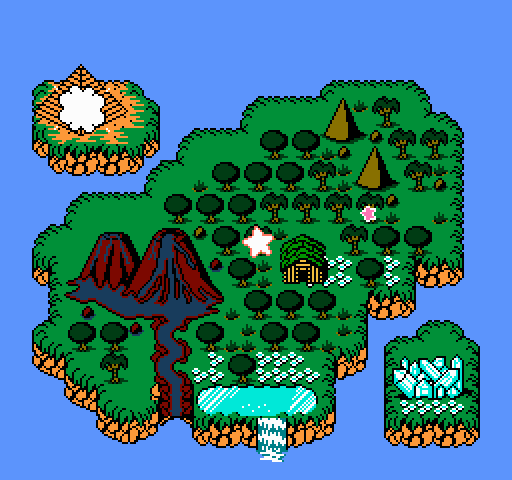
Exploration is another major part of the experience. Dragon Quest III presents a large overworld filled with towns, castles, caves, towers, temples, forests, deserts, mountains, and hidden locations. The world feels considerably larger than the environments found in the earlier games. As the adventure progresses, the player gains access to different forms of transportation, making previously inaccessible areas reachable.
The game encourages players to talk to NPCs and pay attention to information. Villagers may provide clues about important locations, legendary objects, dangerous enemies, or unusual events occurring somewhere in the world. There is no constant stream of objective markers, so discovering the next destination can feel like solving part of the adventure yourself.
Combat follows the traditional turn-based Dragon Quest formula, but the larger party creates much greater tactical variety. Each character can perform different actions during a battle, including attacking, casting spells, defending, using items, or attempting to escape. Choosing the right action becomes increasingly important as stronger monsters begin appearing.
Enemy encounters are frequent, making character development an essential part of the journey. Battles provide experience and gold, allowing the party to level up and purchase improved equipment. This creates the familiar RPG progression loop of exploring, fighting, earning rewards, becoming stronger, and then pushing farther into more dangerous territory.
Magic is particularly important during difficult battles. Offensive spells can target individual enemies or groups, while healing and support spells help the party survive long journeys. Resource management becomes increasingly important when exploring distant areas because running out of magic or healing options can leave the party vulnerable.
Dragon Quest III also has a stronger sense of world-building than the previous games. Different regions have their own cultures, towns, legends, and problems. The player is not simply moving from one dungeon to another; the journey feels like a worldwide adventure. The variety of environments makes the overworld memorable and gives the game a much larger sense of scale.
The dungeons themselves are filled with traps, treasure, branching paths, and powerful monsters. Some require careful navigation, while others contain important story events or valuable equipment. Because the party's resources are limited, entering a dungeon without preparation can be risky. Returning to a town to heal and rest is often an important part of planning a long expedition.
Another memorable aspect of Dragon Quest III is the way its story connects to the broader Dragon Quest mythology. Without giving away the major surprise, the game eventually reveals a connection that places its events in a much larger context. This helped make Dragon Quest III feel like more than just another standalone fantasy adventure and gave longtime players an especially memorable payoff.
Visually, the game remains unmistakably an NES-era RPG. The graphics use tile-based environments, small character sprites, and colorful monster artwork. Despite the hardware limitations, the developers created a surprisingly varied world. Towns, castles, forests, deserts, caves, and oceans all have distinct visual identities, helping the player understand where they are even without a modern map system.
The soundtrack, composed by Koichi Sugiyama, is another important part of the experience. The music gives the overworld a strong sense of adventure while providing different moods for towns, castles, battles, and more dramatic moments. The melodies became an important part of the identity of the Dragon Quest series and helped establish the tradition of orchestral-inspired game music associated with the franchise.
For modern players, Dragon Quest III can initially feel slower than contemporary RPGs. There are no elaborate cutscenes constantly explaining the story, and exploration often requires paying attention to NPC dialogue and remembering clues. Battles can also require grinding, particularly before entering dangerous areas. However, these characteristics are part of what makes the game representative of classic RPG design.
Dragon Quest III was hugely influential because it demonstrated how much depth could be placed inside a console RPG. The combination of party customization, character classes, exploration, transportation, turn-based combat, equipment progression, and a large fantasy world created a template that would influence many games that followed.
The game's legacy has remained strong for decades, and later versions received numerous improvements and additional features. Nevertheless, the NES/Famicom original remains historically fascinating because it captures the genre at a point when developers were still discovering how to translate large-scale tabletop-style fantasy adventures into a console format.
Dragon Quest III is therefore more than simply another classic NES role-playing game. It represents a major evolution of the Dragon Quest formula and helped establish design ideas that would become standard throughout the RPG genre. With its customizable party, extensive world, memorable characters, challenging battles, and legendary adventure structure, it remains one of the defining RPG experiences of the 8-bit generation.




No comments yet.