Destiny of an Emperor
About This Game
Destiny of an Emperor is one of the more ambitious role-playing games available on the Nintendo Entertainment System. Developed and published by Capcom, the game is based on the historical Chinese novel Romance of the Three Kingdoms and follows the struggles of Liu Bei and his allies during one of the most turbulent periods in Chinese history. Rather than focusing on a single hero traveling through a fantasy world, the game presents a large-scale story involving armies, rival kingdoms, political alliances, famous generals, and battles for control of ancient China.
The game immediately stands out from many other NES RPGs because of its historical setting. Instead of fighting dragons, monsters, or supernatural creatures, players encounter military commanders and soldiers drawn from the Three Kingdoms era. Characters such as Liu Bei, Guan Yu, Zhang Fei, Zhuge Liang, Zhao Yun, Cao Cao, and many other legendary figures play important roles throughout the adventure. For players interested in history, strategy, or Japanese and Chinese-inspired storytelling, this gives the game a very different atmosphere from traditional console role-playing games.
At the center of the story is Liu Bei, a ruler determined to restore order during a period of political chaos. The player gradually builds an army around him while traveling between cities, meeting important characters, recruiting generals, and fighting enemy forces. The story is considerably more focused on military campaigns than the typical NES RPG, and much of the player's progress comes from assembling a capable group of commanders and making effective decisions in battle.
Combat is where Destiny of an Emperor really distinguishes itself. Battles are turn-based, but they are not simply a matter of selecting an attack for every character. Generals can lead troops and use different commands, creating a strategic layer that rewards thoughtful decision-making. Players need to consider the strengths of their commanders, the situation on the battlefield, and the abilities available to their army.
Different officers have different specialties, and choosing the right generals can make a significant difference. Some characters are powerful physical fighters, while others are better suited to tactical or support roles. This encourages experimentation as the adventure progresses. A general who seems extremely useful early in the game may eventually be replaced by a stronger or more specialized commander.
The military theme also affects how progression works. Instead of simply thinking about individual characters gaining experience, the player is managing an army. Battles can therefore feel like miniature military campaigns rather than conventional RPG encounters. This gives the game a strategic personality that remains interesting even after many hours of play.
Outside combat, the player travels across a large map and visits cities, villages, castles, and other important locations. Exploration is important because new areas often introduce characters, story developments, equipment, or battles. Towns provide opportunities to rest and prepare for upcoming conflicts, while castles and enemy strongholds can become important destinations during major campaigns.
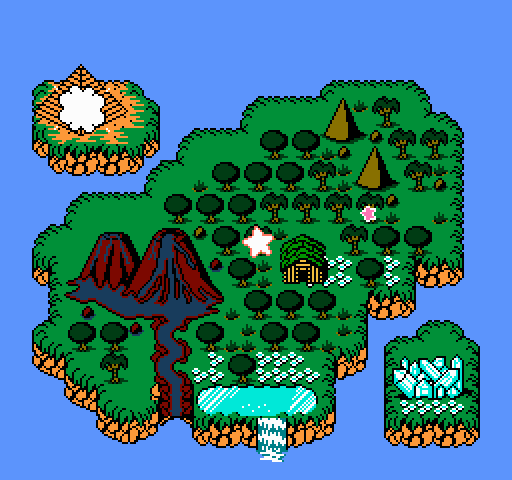
The world map gives Destiny of an Emperor a surprisingly large sense of scale for an NES game. The player is not simply moving from one isolated dungeon to another. Instead, the journey represents a military campaign across a changing political landscape. Territories can belong to different factions, and traveling from one location to another helps communicate the scale of the conflict.
One of the game's biggest strengths is its cast of characters. The Three Kingdoms story is famous for its large collection of generals and political figures, and Destiny of an Emperor takes advantage of that. Some characters are loyal allies, while others become enemies or temporarily join the player's forces. Recognizing famous names and seeing their roles within the story can make the adventure especially rewarding for players familiar with the source material.
The game also gives recruitment an important role. Finding useful generals is part of the adventure, and players have to think about which commanders should be included in their active force. This adds another strategic decision beyond simply leveling up the same group of characters throughout the entire game.
Visually, Destiny of an Emperor has a classic NES RPG appearance. Character portraits and menus are relatively simple, but the presentation communicates the game's historical atmosphere effectively. Battles, towns, castles, and the world map each have their own visual identity. The graphics may look modest compared with later role-playing games, yet they support the game's large-scale storytelling surprisingly well.
The music and sound design also contribute to the atmosphere. Instead of relying on constant dramatic effects, the game uses music to establish a sense of adventure and military conflict. Certain moments feel appropriately serious because the soundtrack reinforces the importance of the campaign taking place around the player.
One thing that makes Destiny of an Emperor particularly memorable is its pacing. The game is not designed as a quick arcade experience. It asks the player to invest time in understanding the world, building an army, developing commanders, and following the political story. Battles can become lengthy, and there are many characters and systems to keep track of. For players who enjoy deeper NES RPGs, however, that slower pace is part of the appeal.
The historical setting also gives the game an unusual educational quality. Even though the adventure takes liberties with the source material and is ultimately designed as entertainment, it introduces players to names and events associated with the Three Kingdoms period. Someone discovering the game without prior knowledge may find themselves interested in learning more about Liu Bei, Cao Cao, Sun Quan, Zhuge Liang, and the many other figures represented in the story.
Compared with more familiar NES RPGs such as Dragon Warrior or Final Fantasy, Destiny of an Emperor feels considerably more focused on military strategy and historical storytelling. There is still exploration, equipment, character development, and traditional turn-based combat, but the game's identity comes from its army-management mechanics and its enormous cast.
Today, Destiny of an Emperor remains an interesting example of how developers experimented with the RPG genre on the NES. Its combination of historical fiction, turn-based battles, recruitment, exploration, and strategic decision-making gives it a personality that is easy to recognize. It is not simply another fantasy RPG with different character names; the Three Kingdoms setting influences nearly every part of the experience.
For retro RPG fans, the game is especially worth discovering because it demonstrates just how much ambition could be packed into an NES cartridge. Its large story, extensive cast, strategic battles, and historical setting make it one of the more distinctive role-playing experiences on the system. Whether you already know the story of the Three Kingdoms or are encountering Liu Bei and his companions for the first time, Destiny of an Emperor offers a memorable journey through one of the most famous historical settings ever adapted into a video game.






No comments yet.