Final Fantasy III
About This Game
Final Fantasy III is one of the most ambitious role-playing games ever released for the Nintendo Entertainment System. Originally launched in Japan for the Family Computer in 1990, it expanded the ideas introduced by the first two Final Fantasy games with a much larger world, a more developed story, a flexible job system, airships, memorable characters, and some of the most impressive technical work seen on the NES. For players exploring the classic Final Fantasy series, it represents a major step forward in both gameplay and presentation.
There is an important naming detail worth understanding before discussing the game. The original Japanese Final Fantasy III is a completely different game from the title that was later released internationally as Final Fantasy III on the Super Nintendo. The Japanese NES game is commonly identified today as Final Fantasy III (NES) or Final Fantasy III Famicom, while the Western Super Nintendo release called Final Fantasy III is actually Final Fantasy VI in Japan. This distinction is particularly important when searching for the original NES version.
The adventure begins with four young heroes whose lives are connected to the mysterious power of the Crystals. After an earthquake changes the landscape around them, the group becomes involved in a much larger conflict threatening the balance of the world. What initially appears to be a local mystery gradually develops into an enormous journey involving kingdoms, ancient civilizations, airships, powerful creatures, and forces capable of reshaping the entire world.
One of the game's defining features is its four main protagonists. Unlike Final Fantasy II, where the party's composition changes frequently and characters have more individualized roles, Final Fantasy III places four young heroes at the center of the adventure. They become the player's constant companions as the story develops, giving the game a stronger sense of party identity.
The characters also benefit from the game's job system, which is arguably its most important gameplay innovation. Rather than permanently locking each hero into a particular class, Final Fantasy III allows the player to change jobs as the adventure progresses. Warriors, monks, white mages, black mages, dragoons, thieves, summoners, and many other specialized roles become available.
This system dramatically increases the amount of customization in the game. A character who begins as one type of fighter can later become a completely different class. The player can therefore experiment with different party combinations depending on the enemies, dungeon, or boss encounter ahead.
Job changes are not simply cosmetic. Different jobs use different weapons, armor, abilities, and combat techniques. A Black Mage can specialize in offensive magic, while a White Mage provides healing and support. A Monk relies heavily on physical strength, while a Dragoon has unique jumping abilities that can be useful against certain enemies.
Later in the adventure, the job system becomes even more sophisticated as additional classes become available. This creates a strong sense of progression because obtaining a new job can completely change the way the party is played.
Combat itself follows the traditional turn-based Final Fantasy structure. Players choose commands for each character before the battle resolves. Physical attacks, magic, items, special abilities, and other commands are used to defeat enemies.
The job system gives these battles considerable variety. Instead of simply improving the same four characters throughout the entire game, players can adjust their party's roles. A difficult boss may encourage the player to rethink the current party composition and experiment with different abilities.
Magic plays a major role as well. Spells are divided into different categories and can be used for offense, healing, support, and exploration. Black Magic can exploit enemy weaknesses, while White Magic keeps the party alive during long journeys. Summoning also becomes an important part of the game's later progression.
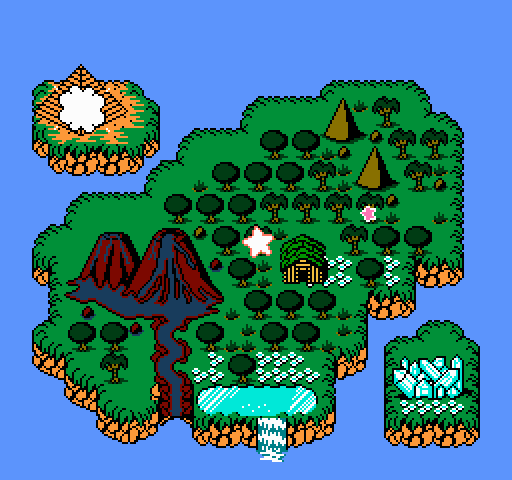
The world of Final Fantasy III is considerably larger than that of its predecessors. Players travel across an expansive map containing towns, castles, caves, forests, ruins, and other locations. The game gradually introduces new transportation methods that allow the party to reach previously inaccessible regions.
Airships are particularly important to the sense of scale. They transform the world map from a collection of distant locations into a genuinely explorable environment. As the party acquires improved forms of transportation, areas that were previously unreachable become accessible.
This progression creates a strong feeling of adventure. The player is constantly gaining new abilities, equipment, jobs, and transportation options that expand what can be explored. A location that seemed impossibly distant early in the game may become easy to reach later.
The game's dungeons are another major part of the experience. They range from traditional caves to ancient ruins and more elaborate multi-level environments. Some contain puzzles, hidden treasures, powerful enemies, and equipment specifically designed for particular jobs.
Dungeon exploration can be demanding because resources must be managed carefully. Healing spells, magic points, items, and character health all matter when traveling through longer areas. Reaching a save point or returning safely to a town can therefore feel like a genuine accomplishment.
Final Fantasy III also makes extensive use of boss encounters. Major enemies often require the player to think about party composition and battle strategy rather than simply attacking repeatedly. Understanding the strengths of different jobs can make a significant difference in difficult battles.
The story gradually becomes much larger than the initial Crystal mystery suggests. The player encounters different civilizations and learns about ancient events that explain why the world is in danger. The narrative repeatedly expands the scope of the adventure, giving the impression that there is always another layer of the world waiting to be discovered.
One of the game's most memorable locations is the Floating Continent, an enormous region that introduces the player to the scale and mystery of the game's world. Beyond it lies an even larger adventure, with new locations, enemies, transportation methods, and challenges.
The game's visual presentation was highly impressive for its hardware. Character sprites, monsters, environments, and battle scenes are noticeably more detailed than those found in the earliest Final Fantasy games. Towns and dungeons contain a greater variety of visual elements, while battles make effective use of animation and effects.
The soundtrack is another major strength. Nobuo Uematsu's music gives Final Fantasy III a wide range of moods, from adventurous world-map themes to dramatic battle music and quieter town compositions. The soundtrack helps distinguish locations and gives important story moments additional emotional weight.
Technically, the game is also notable because it pushed the Famicom hardware considerably. The developers created a large RPG with many jobs, numerous enemies, extensive environments, animated battles, and a substantial soundtrack. For players experiencing it in its original hardware context, the scope of the game is particularly impressive.
Final Fantasy III also demonstrates how the series was beginning to move toward more sophisticated character and world design. The first Final Fantasy established many fundamental RPG systems, while Final Fantasy II experimented heavily with progression and storytelling. Final Fantasy III takes those lessons and combines them into a much larger adventure.
The job system would become one of the most influential ideas associated with the Final Fantasy series. Later games would revisit and modify the concept in different ways, but the basic idea of allowing players to customize characters through different classes became an important part of the franchise's identity.
Despite its strengths, the original Final Fantasy III can be challenging for modern players. Some dungeons are long, enemies can become significantly stronger as the adventure progresses, and the game expects players to understand how its different systems work. The job system also requires experimentation rather than simply relying on one fixed party setup.
That difficulty is closely connected to the game's design philosophy. Final Fantasy III expects the player to prepare before entering dangerous areas. Having appropriate equipment, useful jobs, healing magic, and enough resources can make the difference between success and failure.
For retro RPG fans, this is part of the appeal. The game does not simply hand the player a fixed set of abilities and ask them to follow a predetermined path. Instead, it gives the player a toolbox and gradually expands that toolbox throughout the adventure.
The original Final Fantasy III is therefore much more than another NES role-playing game. It represents a major evolution of the series, combining a large world, memorable characters, flexible job customization, traditional turn-based combat, airship exploration, magic, summons, and increasingly elaborate storytelling.
Its historical importance is also significant. The game demonstrated how far a console RPG could be pushed on the Famicom and helped establish systems that would influence later entries in the franchise. Even though it remained exclusive to Japan for many years, its reputation eventually spread internationally through ports, remakes, and retro gaming communities.
For anyone exploring the NES library, Final Fantasy III is an essential title. It captures the ambitious spirit of late-era Famicom RPG development and provides an experience that is much deeper than its 8-bit presentation might suggest. The flexible job system alone makes every playthrough capable of feeling somewhat different, while the enormous world and evolving story provide plenty of reasons to keep exploring.
Final Fantasy III remains a fascinating snapshot of the Final Fantasy series at a point when its developers were experimenting rapidly with character customization, world design, and technical presentation. Its combination of traditional RPG mechanics and innovative job-based progression helped make it one of the standout role-playing games of the NES/Famicom generation.




No comments yet.