Dragon Power
About This Game
Dragon Power is a colorful action-adventure game for the Nintendo Entertainment System that introduced North American players to a heavily modified version of Bandai's Dragon Ball game. Released in 1988, the game combines side-scrolling martial arts combat with exploration, simple puzzle elements, and a lighthearted fantasy story. Although its presentation was altered for Western audiences, the game remains an interesting piece of early Dragon Ball history and a distinctive entry in the NES action library.
The player takes control of a young martial artist on a journey through a world filled with dangerous opponents, unusual creatures, and challenging obstacles. The adventure is structured around traveling through different areas, fighting enemies, collecting useful items, and eventually confronting stronger opponents. Rather than following the fast-paced structure of a conventional beat 'em up, Dragon Power mixes several different styles of gameplay.
Combat is the most important part of the experience. The player character can use punches, kicks, jumping attacks, and other martial arts techniques to defeat enemies. Battles generally take place in side-scrolling environments, meaning the player has to deal with opponents while also moving through the stage.
Enemies can approach from different directions, making positioning important. Simply walking forward and attacking everything is not always the best strategy. Players need to watch enemy movements, choose the right moment to strike, and avoid taking unnecessary damage. This gives the game a slightly more deliberate feeling than some of the faster NES action games.
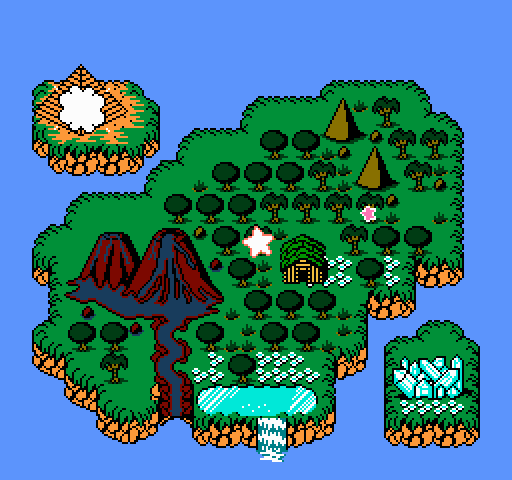
One of the more unusual aspects of Dragon Power is the way it combines fighting with exploration. The player is not simply moving through a series of linear combat arenas. There are areas to investigate, items to find, and obstacles that require some thought. This helps give the adventure a broader sense of progression.
The game also features a variety of characters and situations inspired by the early Dragon Ball universe. Players familiar with the original Japanese series may recognize the basic ideas behind several characters and story elements, although the North American version changed names, designs, and presentation. The result is a game that feels like a curious snapshot of how Japanese entertainment properties were adapted for Western audiences during the NES era.
The original source material is particularly important when looking at Dragon Power. The Japanese game was based on the early Dragon Ball story, when Goku's adventures were still focused heavily on comedy, martial arts, treasure hunting, and fantasy. The NES adaptation reflects that mixture rather than the more serious, battle-focused style associated with later Dragon Ball Z.
Because of this, Dragon Power has a much more whimsical atmosphere than someone unfamiliar with the early series might expect. The world contains strange creatures, colorful characters, martial artists, and exaggerated situations. The game does not take itself especially seriously, and this gives it a personality that separates it from darker action games of the period.
The environments are varied enough to maintain interest throughout the adventure. Forests, mountains, open areas, and other locations provide different backgrounds and enemy encounters. The graphics are clearly limited by the NES hardware, but the colorful character designs help make the world feel lively.
The combat animations are relatively simple, yet the game does a good job of communicating what is happening on screen. Punches and kicks are easy to recognize, while enemies have distinctive appearances that help the player identify different threats.
Items also play an important role. Exploring the environment can reveal objects that assist the player, making it worthwhile to pay attention rather than rushing through every section. This gives the game a small amount of adventure-game flavor and helps break up the combat.
Some sections also involve simple environmental challenges. Players may need to figure out how to proceed through an area rather than simply defeating every enemy. These moments are not as complex as the puzzles found in dedicated adventure games, but they add variety to the overall experience.
The game's difficulty can vary considerably depending on the situation. Early encounters help players become familiar with the controls, but later enemies can become much more dangerous. Timing attacks and avoiding unnecessary hits are important because health can disappear quickly when the player is surrounded.
Boss encounters provide some of the most challenging moments. Stronger opponents have more health and can deal significant damage, requiring players to understand their attack patterns. Learning when to attack and when to stay out of danger becomes particularly important during these fights.
The game also has a distinctive presentation because of its historical position. Today, Dragon Ball is one of the world's most recognizable anime and manga franchises, but that was not the case in the United States when Dragon Power appeared on the NES. The localization removed many direct references to Dragon Ball, changing character names and modifying visual elements.
For modern players, this makes Dragon Power especially interesting. It is not simply an unrelated martial arts game; it represents one of the earliest attempts to bring the world of Dragon Ball to Western home consoles. Comparing it with the original Japanese material reveals how dramatically licensed games could be changed during the localization process.
The soundtrack provides another enjoyable part of the experience. The NES audio hardware produces energetic melodies and simple sound effects that suit the game's lighthearted martial arts atmosphere. The music helps connect the different areas and gives the adventure a consistent sense of momentum.
While Dragon Power does not have the depth of later fighting games or the complex progression systems of larger RPGs, its appeal comes from the mixture of genres. It is part action game, part adventure, and part martial arts journey. The player is constantly switching between fighting opponents, exploring environments, and looking for ways to move forward.
For fans of retro gaming, the game is also a reminder of how different video game adaptations could be during the NES era. Modern licensed games often attempt to reproduce their source material closely, but Dragon Power represents a time when localization could fundamentally reshape a property for another market.
Despite those changes, the underlying game remains enjoyable on its own terms. Its colorful world, martial arts combat, exploration, humorous tone, and recognizable character concepts give it plenty of personality. Players who approach it without expecting a modern Dragon Ball fighting game may find a surprisingly charming adventure.
Ultimately, Dragon Power is an unusual but historically interesting NES title. It combines early Dragon Ball concepts with traditional 8-bit action and adventure mechanics, resulting in a game that feels very different from the later Dragon Ball Z games that would become popular on other systems. Its mixture of combat, exploration, colorful environments, and quirky characters makes it an entertaining example of early anime-inspired console gaming.
For retro enthusiasts, Dragon Power is worth experiencing not only as a standalone NES adventure but also as a piece of video game localization history. It shows how a famous Japanese franchise was transformed for a new audience while retaining the basic spirit of martial arts, adventure, humor, and exploration that defined the earliest Dragon Ball stories.



No comments yet.