Shovel Knight (Hack)
About This Game
Shovel Knight is a retro-inspired action platformer that deliberately looks and feels like a classic 8-bit game while adding mechanics and design ideas that would have been difficult to achieve on the original NES. Developed by Yacht Club Games, the game follows Shovel Knight, a wandering warrior who fights through a fantasy kingdom with a shovel as his primary weapon. Although it was released decades after the NES era, its pixel-art graphics, chiptune-inspired soundtrack, level structure, and gameplay are heavily influenced by classic Nintendo-era platformers.
The central character is exactly what the title suggests: a knight who uses a shovel instead of a traditional sword. At first, the concept sounds like a joke, but the shovel becomes the foundation of almost every major gameplay mechanic. Shovel Knight can swing it at enemies, dig through certain objects, uncover treasure, and even use it to bounce off enemies and objects. This gives the game a distinctive movement system that feels familiar to fans of classic platformers while still being its own thing.
The shovel's downward attack is particularly important. When Shovel Knight is airborne, he can point the shovel downward and bounce off enemies, blocks, and other objects. Successfully chaining these bounces allows the player to cross gaps, reach higher platforms, and defeat enemies without touching the ground. Some sections are designed specifically around this mechanic, requiring careful timing and positioning.
This system gives Shovel Knight a very different rhythm from traditional sword-based platformers. Instead of simply jumping over an enemy, the player can choose to attack from above and use the opponent as a stepping stone. Once mastered, this mechanic allows Shovel Knight to move through certain areas with remarkable speed.
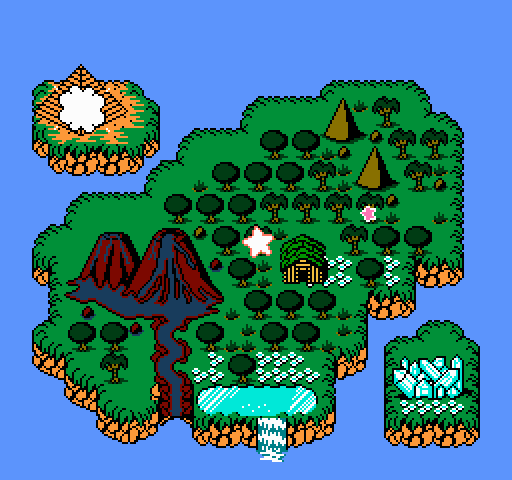
The game is structured around a world map containing different stages, each associated with a major knight. These stages have their own visual themes, enemies, hazards, and bosses. The variety helps keep the adventure interesting because completing one area does not simply mean repeating the same platforming challenges in a different color.
The bosses are among the most memorable characters in the game. Knights such as King Knight, Specter Knight, Treasure Knight, Mole Knight, and other members of the Order of No Quarter each have their own personalities, environments, and fighting styles. Their stages are designed around the characteristics of the corresponding boss, creating a stronger connection between level design and character design than is common in many traditional platformers.
This structure clearly recalls classic games such as Mega Man, where players choose stages and eventually confront distinctive bosses. However, Shovel Knight adds its own interpretation through the medieval fantasy setting and its shovel-based combat.
Exploration is also an important part of the experience. Levels contain hidden areas, treasure, secret rooms, and collectible items. Players who simply rush toward the end of a stage will often miss valuable discoveries. Searching for secrets encourages a slower and more observant approach, while the basic platforming mechanics remain fast enough to support aggressive play.
Gold acts as an important resource. Enemies and hidden areas can provide treasure, and players can spend their accumulated wealth on useful upgrades and equipment. This creates a risk-and-reward system because losing a life can cause the player to drop some of their collected gold. Recovering that treasure requires returning to the area where it was lost, creating an additional reason to play carefully.
Equipment upgrades add another layer of customization. Shovel Knight can acquire different armor options and relics that change the way certain situations can be handled. Relics provide special abilities that consume magic, allowing players to supplement their normal shovel attacks with additional powers.
These relics can be particularly useful against certain enemies or bosses. One relic may provide a ranged attack, while another can help with movement or defense. The system gives players freedom to experiment rather than forcing everyone to approach the game in exactly the same way.
The platforming itself is deliberately precise. Shovel Knight has responsive controls, and the levels are built around jumps that require the player to understand momentum, distance, and timing. Moving platforms, pits, enemies, disappearing blocks, and other hazards are introduced throughout the adventure.
Difficulty is carefully balanced around the idea of learning. A new obstacle may cause a player to fail several times, but once its timing is understood, it becomes considerably easier. This philosophy is strongly connected to classic NES design, where memorization and repeated attempts were an important part of the experience.
The visual presentation is perhaps the clearest indication of Shovel Knight's retro inspiration. The game uses pixel art with a deliberately limited aesthetic, creating the impression of a lost 8-bit adventure. Characters are expressive despite their relatively small sprites, and the backgrounds contain enough detail to establish distinct locations.
At the same time, Shovel Knight is not simply pretending to be an old NES game. The developers use modern design knowledge to create larger and more sophisticated environments than many genuine 8-bit games could offer. The result is a game that understands the limitations and strengths of classic platformers while improving many aspects of the formula.
The soundtrack is equally important. Composer Jake Kaufman created music that draws heavily from the sound of classic chiptune games. The melodies are energetic and memorable, with different themes helping each stage develop its own identity. For players who grew up with NES music, the soundtrack can immediately evoke the feeling of discovering a new cartridge during the 8-bit era.
The story also contributes to the game's charm. Shovel Knight and Shield Knight are legendary adventurers whose lives are changed after an expedition goes wrong. Shovel Knight eventually returns to the road and begins an adventure that leads him into conflict with the Order of No Quarter. Although the story is more substantial than those of many NES platformers, it is presented with the same playful tone as the rest of the game.
Dialogue is filled with humor, unusual characters, and references to classic gaming conventions. Towns contain characters who provide information, upgrades, and small interactions, giving the world more personality without slowing the game down.
One of the most impressive things about Shovel Knight is how naturally all these elements fit together. The game looks like an old platformer, but it does not feel like a shallow imitation. The shovel mechanic gives it a strong identity, the level design is carefully constructed, and the progression systems add depth without overwhelming the player.
It is also important to clarify that Shovel Knight is not an original NES game. It was released much later as a modern retro-inspired title and appeared on numerous platforms. Its inclusion alongside NES games is understandable because its entire artistic and mechanical philosophy is heavily influenced by the 8-bit era, but technically it belongs to a much later generation of gaming.
For retro enthusiasts, this distinction actually makes Shovel Knight more interesting. It demonstrates that the design principles of the NES era can still work when combined with modern development techniques. Instead of simply reproducing old graphics, the game captures the feeling of classic platforming while giving players a much larger and more refined adventure.
Shovel Knight remains one of the strongest examples of modern retro game design. Its combination of precise platforming, creative bosses, treasure hunting, equipment upgrades, memorable music, and humorous fantasy storytelling makes it accessible to newcomers while offering plenty of depth for experienced players.
For anyone who enjoys classic NES platformers but wants something created with modern design sensibilities, Shovel Knight is an excellent choice. The shovel may sound like an unusual weapon for a knight, but it becomes the foundation of a remarkably versatile gameplay system. By combining familiar 8-bit ideas with thoughtful modern mechanics, Shovel Knight successfully recreates the spirit of classic platform gaming without simply copying it.



No comments yet.