Dragon Quest II
About This Game
Dragon Quest II is an important chapter in the early history of console role-playing games. Released in Japan in 1987 for the Nintendo Family Computer and later localized for the NES in North America as Dragon Warrior II, it expanded almost every major idea introduced by the original Dragon Quest. The world became larger, the story became more ambitious, and the player was no longer limited to controlling a single hero. Instead, the adventure introduces a small party of characters who must travel across a much larger world, uncover the secrets of their royal heritage, and ultimately confront a powerful enemy threatening the kingdoms of the land.
The story takes place roughly a century after the events of the first game. The hero of the original adventure founded a new kingdom after defeating the Dragonlord, and his descendants now rule different lands. This peaceful period comes to an abrupt end when the evil wizard Hargon attacks the kingdom of Moonbrooke. The castle is destroyed, its people are scattered, and the princess is transformed into a terrible monster. The prince of Midenhall is then sent on a journey to find the survivors, locate the descendants of the old royal families, and gather the strength necessary to confront Hargon.
One of the biggest changes from the first Dragon Quest is the introduction of a party-based system. Rather than controlling only one character, the player eventually travels with multiple heroes, each with different strengths and abilities. The Prince of Midenhall serves as the primary physical fighter, while the Prince of Cannock provides a mixture of combat ability and magic. The Princess of Moonbrooke is the party's strongest spellcaster and brings a completely different tactical dimension to battles.
This party system makes combat considerably more interesting than in the original game. Each character has different equipment options, statistics, and magical abilities, so choosing how to approach enemies becomes more important. Physical attacks may be the safest option against weaker monsters, while stronger enemies can require carefully selected spells. The party also has to manage health and magic resources while traveling through dangerous areas.
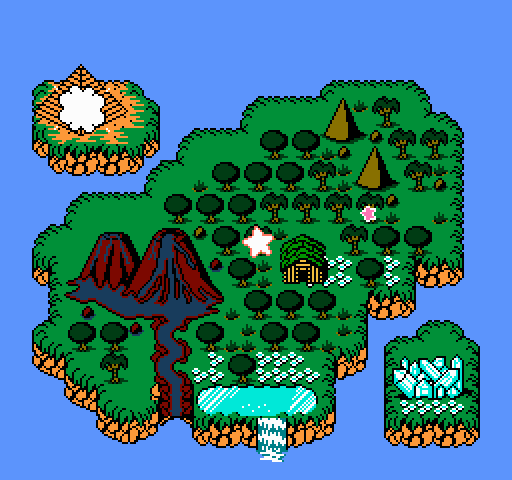
Dragon Quest II greatly expands the game's world as well. Instead of exploring a relatively compact kingdom, players eventually gain access to multiple regions and large bodies of water. The introduction of a ship is particularly important because it transforms the way exploration works. The world opens up considerably once the party can travel by sea, and players begin discovering islands, remote towns, hidden locations, and new areas that were previously inaccessible.
This expanded world also gives Dragon Quest II a stronger sense of adventure. Traveling between locations is no longer simply a matter of following a straightforward route. Players often need to talk to villagers, remember clues, search for important items, and determine where to go next. The game expects players to pay attention to information received from NPCs. This older design philosophy can make the adventure feel more mysterious because the game does not constantly place markers on the map telling the player exactly what to do.
The overworld is also filled with random encounters. Monsters can appear while traveling through forests, plains, deserts, and other environments. These battles are essential because experience points and gold allow the party to become stronger. As the characters gain levels, they can equip better weapons and armor and survive increasingly difficult encounters.
Dungeons play a major role in the adventure as well. Many areas are designed as mazes rather than simple corridors leading directly to a boss. Players may need to explore multiple paths, search for treasure, find important objects, and carefully manage their resources. Some areas are particularly challenging because powerful enemies can appear repeatedly, making it dangerous to wander without preparation.
The NES version of Dragon Quest II is also remembered for its difficulty. While the game builds naturally on the systems of its predecessor, some sections can be surprisingly demanding. Certain enemies are capable of dealing heavy damage, and later areas can punish players who have not sufficiently leveled their party or upgraded their equipment. The challenge is part of the game's identity, although it can feel considerably harsher to modern players accustomed to more forgiving RPG design.
Magic is especially important because the party members fulfill different roles. Cannock and Moonbrooke have access to spells that can provide healing, offensive power, defensive advantages, and utility during exploration. Managing magic points becomes a strategic consideration because returning to a town is not always convenient. A difficult dungeon can become a battle of endurance as much as a test of combat ability.
Dragon Quest II also features several memorable pieces of equipment and important quest items that encourage exploration. The player gradually collects tools and discovers new ways to move through the world. This creates a sense of progression beyond simple character levels. An area that was previously impossible to reach may become accessible after obtaining a new item or transportation method, giving the world a connected and gradually unfolding structure.
The game's presentation retains the distinctive visual style of the original Dragon Quest while making the world feel considerably larger. Towns, castles, caves, towers, deserts, forests, and islands are represented through colorful tile-based environments. Character sprites are simple by modern standards, but the different characters and monsters are recognizable and contribute to the game's classic fantasy atmosphere.
Music is another important part of the experience. Koichi Sugiyama once again provided the soundtrack, creating melodies that helped define the atmosphere of the growing Dragon Quest series. The music gives towns, castles, battles, and the overworld their own identity while reinforcing the sense that the player is traveling through a large fantasy world.
For fans of classic RPGs, Dragon Quest II is particularly interesting because it represents a major transition between the first game and the more sophisticated Dragon Quest titles that followed. The original established the basic formula, while the sequel experimented with party-based gameplay, a larger world, expanded exploration, and a more involved narrative.
Its influence can be seen throughout the history of Japanese console RPGs. The idea of assembling a group of characters with different abilities, traveling across a large overworld, acquiring transportation, exploring increasingly dangerous locations, and eventually confronting a major villain became a familiar structure for countless RPGs.
Dragon Quest II may feel primitive compared with modern role-playing games, but its importance becomes clearer when viewed in its historical context. It took the foundation established by the first game and significantly increased its scale. The result is an adventure that feels more like a traditional fantasy journey, with a group of heroes traveling across kingdoms and seas in search of answers and ultimately preparing for a confrontation with Hargon.
For players interested in the roots of console RPGs, Dragon Quest II remains a fascinating NES experience. Its challenging battles, memorable party members, large overworld, classic fantasy setting, and exploration-focused design make it an important part of the early Dragon Quest legacy. Whether played under its original Japanese title or as Dragon Warrior II on the NES, it demonstrates how quickly the role-playing genre was evolving during the 8-bit era.





No comments yet.