Ikari Warriors III The Rescue
About This Game
Ikari Warriors III, commonly known as Ikari Warriors III: The Rescue, is the third major entry in SNK’s classic Ikari Warriors series. Like its predecessors, it is an overhead run-and-gun action game centered around heavily armed soldiers fighting through hostile territory. However, the third game moves away from some of the more unusual fantasy elements of Victory Road and returns to a more recognizable military-action setting. The result is a game that feels closer to the original Ikari Warriors while introducing its own changes to movement, weapons, enemies, and level design.
The basic premise is straightforward. The player takes control of one of the Ikari Warriors and sets out on a dangerous mission to rescue hostages while battling enemy forces along the way. The action is viewed from above, allowing the character to move in multiple directions rather than being restricted to a traditional left-to-right platforming path. Enemies can approach from almost anywhere, so surviving requires constant attention to the surrounding battlefield.
This overhead perspective remains one of the most important characteristics of the series. Instead of simply reacting to enemies appearing from the front, players need to consider threats coming from the sides and behind as well. Moving forward without checking the surrounding area can quickly result in being surrounded. The game therefore combines shooting with positioning and battlefield awareness.
The Ikari Warriors' familiar weapons are once again at the center of the experience. Players can use firearms to attack enemies from a distance, while grenades provide a stronger option for dealing with groups or dangerous targets. Weapons and ammunition management are important because blindly firing in every direction is not always the best way to survive.
Compared with the first Ikari Warriors, the third game feels somewhat more focused on straightforward action. The strange creatures and fantasy-oriented atmosphere of Victory Road are reduced, giving The Rescue a more conventional military-adventure identity. This makes it easier to recognize the connection with the original game while still providing a different campaign.
The title itself gives the player's objective away: rescue. Hostages are an important part of the game's progression, and reaching them safely adds another layer to the usual run-and-gun formula. The player is not simply moving through enemy territory for the sake of destroying everything. There is a mission behind the fighting, giving the stages a greater sense of purpose.
The environments provide a variety of battlefield situations. Rather than presenting a completely uniform series of areas, the game uses different terrain and obstacles to create changes in how the player approaches combat. Buildings, natural environments, enemy positions, and other hazards can interrupt the player's movement and force them to adjust their route.
As in the earlier games, enemy placement is one of the main sources of difficulty. Enemies can attack in groups and make it difficult to maintain a safe position. Some encounters reward aggressive movement, while others are better handled by creating distance and eliminating enemies from a safer location.
This balance between aggression and caution is important. The game may look like a simple shooting game, but rushing forward without considering enemy positions can be disastrous. Players gradually learn which situations require immediate movement and which can be handled by staying back and firing carefully.
One of the distinctive aspects of the Ikari Warriors series is its physical combat. Although firearms are important, the characters are also capable of close-range attacks. This gives the player another option when enemies get too close. In situations where ammunition or positioning becomes a problem, close combat can provide a useful alternative.
The combination of ranged and close-range attacks helps make the gameplay more varied than a simple shoot-everything formula. Players have to consider distance and enemy type while navigating the battlefield.
The game also retains the arcade-inspired philosophy that defines the series. Ikari Warriors III does not spend much time explaining complicated systems. The objective is quickly understood, and the player learns through repeated play. Enemy patterns, weapon behavior, dangerous areas, and effective routes gradually become familiar.
That approach also contributes to the game's difficulty. Players accustomed to modern games may find the experience unforgiving because mistakes can quickly cost lives or progress. There is little room for careless movement. The game expects players to improve by remembering dangerous situations and adapting during subsequent attempts.
Cooperative multiplayer is another important part of the Ikari Warriors identity. Two players can take on the battlefield together, making it possible to coordinate attacks and cover different directions. Cooperative play can make certain encounters easier because enemies approaching one player can be attacked by the other.
However, two-player action also increases the chaos. With two heavily armed characters moving around the same battlefield, enemies, projectiles, explosions, and movement can fill the screen quickly. The resulting experience has the energetic quality associated with classic arcade games, where multiplayer sessions often become as much about surviving the chaos as completing the objective.
The visual presentation is characteristic of late-1980s NES action games. The characters and environments are represented with relatively simple sprites, but the military theme is easy to recognize. Soldiers, weapons, vehicles, buildings, and battlefield scenery create an atmosphere that contrasts with the fantasy-inspired direction of the previous game.
The audio supports the same atmosphere. Gunfire, explosions, enemy attacks, and other sound effects keep the action moving. The music and effects are not designed to provide a cinematic war experience; instead, they serve the arcade-style gameplay by keeping the player aware that the battlefield is constantly active.
Ikari Warriors III is also interesting when viewed as part of the evolution of overhead action games. By the time it appeared, the NES had a large selection of shooters and action games, and players had become accustomed to increasingly sophisticated mechanics. The Ikari series had to retain its recognizable identity while competing with other fast-paced games.
The third game therefore feels like a refinement of an established formula rather than a complete reinvention. The emphasis remains on movement, shooting, enemy encounters, weapons, and survival. The rescue objective provides additional structure without abandoning the straightforward arcade gameplay that defines the franchise.
For fans of the original Ikari Warriors, this makes The Rescue an interesting continuation. It does not rely as heavily on the unusual fantasy elements that made Victory Road distinctive, instead bringing the series back toward a military-action concept. At the same time, it retains enough of the series' recognizable mechanics to feel like a natural continuation.
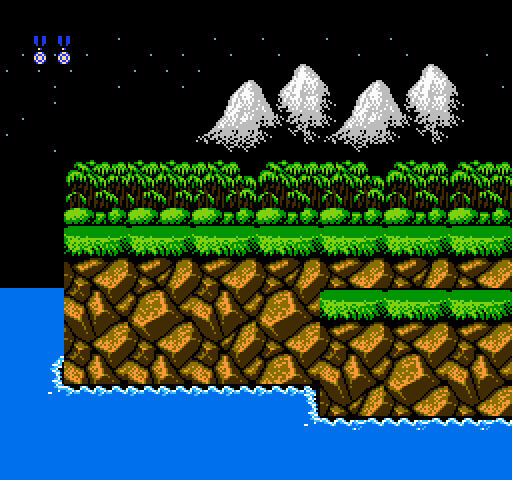
The overhead perspective also gives the game a different rhythm from side-scrolling run-and-gun titles such as Contra. In Contra, the player's attention is generally focused on the area directly ahead, while Ikari Warriors III requires awareness in several directions. Enemies can approach from multiple angles, and the player has more freedom to maneuver around the battlefield.
That freedom can create some tense situations. Being surrounded is one of the greatest dangers, and escaping often requires moving through an area while simultaneously firing at enemies. The ability to attack while moving is therefore essential to surviving difficult sections.
Ikari Warriors III is not necessarily the most famous game in SNK's library, but it is an important part of the company's NES-era action catalog. It shows how SNK continued developing its overhead combat formula while adapting it to the limitations and possibilities of Nintendo's home console.
For retro gaming enthusiasts, the game is particularly interesting as the conclusion of the main NES-era Ikari Warriors trilogy. Each entry has a somewhat different identity: the original establishes the military run-and-gun formula, Victory Road takes the concept into a strange fantasy-inspired world, and The Rescue returns to a more conventional action setting centered around a rescue mission.
Today, Ikari Warriors III: The Rescue remains a challenging example of classic overhead action design. Its combination of shooting, close combat, multiple-direction movement, enemy waves, hostage rescue, and cooperative play gives it a distinct character. It may require patience to master, but that difficulty is an important part of its old-school arcade personality.
For players exploring the history of NES action games, The Rescue is worth experiencing as the final chapter of the original console trilogy. It demonstrates how SNK's Ikari Warriors concept evolved across three games while maintaining the core idea that made the series recognizable: enter dangerous territory, stay mobile, fight through overwhelming enemy forces, and survive long enough to complete the mission.



No comments yet.