Dragon Warrior IV
About This Game
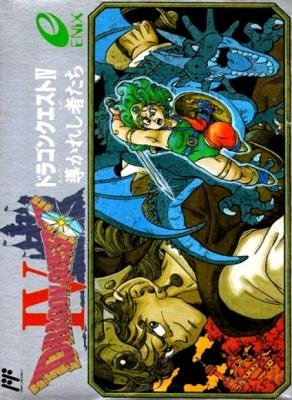
Dragon Warrior IV is the fourth major entry in the classic Dragon Quest series and one of the most ambitious RPGs released for the Nintendo Entertainment System. Known as Dragon Quest IV in Japan, the game was originally released for the Famicom in 1990 and later localized for North America as Dragon Warrior IV. It represents an important evolution of the series because it moves beyond the traditional structure of simply following one hero from beginning to end. Instead, the game introduces a group of memorable characters through separate chapters before bringing their individual stories together into one larger adventure.
The story begins in the world of Zenithia and introduces a growing threat connected to the powerful ruler Psaro the Manslayer. Rather than immediately placing the player in control of the central hero, Dragon Warrior IV takes a different approach. The early portion of the game is divided into chapters, with each chapter focusing on different characters and their personal goals. This gives the player an opportunity to experience the world from several perspectives before the main adventure fully begins.
The first chapter follows Ragnar McRyan, a soldier serving the kingdom of Burland. Children have mysteriously disappeared from nearby villages, and Ragnar is ordered to investigate. His adventure has the feeling of a traditional fantasy quest, involving monsters, castles, villages, and dangerous locations. Ragnar is a powerful physical fighter, making his chapter a straightforward introduction to the game's combat mechanics.
The second chapter introduces Princess Alena, a determined young royal who wants to experience life outside the palace. She escapes with her companions Kiryl and Borya, creating a very different style of adventure from Ragnar's story. Alena is an excellent physical fighter, while Kiryl provides healing and support magic and Borya specializes in offensive spells.
The third chapter takes an especially unusual direction. Instead of controlling a traditional warrior or group of adventurers, players take the role of Torneko Taloon, a merchant who dreams of building a successful business. His chapter introduces economic and trading mechanics, with Torneko buying and selling goods while attempting to establish himself as a successful merchant. This change of gameplay makes the chapter stand out from almost every other part of the game.
The fourth chapter follows the sisters Maya and Meena. Their journey is more closely connected to the central conflict and introduces themes of family, revenge, and the mysterious enemy behind the growing danger. Maya is a powerful spellcaster, while Meena uses both magic and fortune-telling abilities. Their story adds another layer of personality to the game's expanding cast.
After these separate chapters, the fifth chapter introduces the main hero. At this point, the characters and events from the previous chapters begin to converge. The player gradually assembles a full party and embarks on a much larger journey. Characters who previously had their own adventures now become members of the hero's party, giving their presence much more meaning.
This structure is one of Dragon Warrior IV's greatest strengths. Because the player has already experienced the backgrounds of many party members, they feel more like independent characters than simple RPG statistics. Each person has a history, personality, abilities, and reason for joining the larger quest.
The combat system remains based on traditional turn-based Dragon Quest mechanics. Battles occur randomly while traveling through the overworld and exploring dungeons. Players can select commands such as attack, magic, item, defend, or escape. However, the larger party introduces much greater tactical variety than the earlier games.
Dragon Warrior IV also experiments with artificial intelligence for party members. Depending on the player's battle instructions, characters other than the hero can make their own decisions during combat. This was an interesting idea for an NES RPG because it attempted to make party members feel more like independent companions rather than characters who simply wait for the player to issue every command.
Character roles are highly varied. Ragnar specializes in physical combat and can withstand considerable damage. Alena is another powerful physical fighter, particularly effective when dealing direct damage. Kiryl provides healing and support abilities, while Borya and Maya offer powerful offensive magic. Meena combines magical support with other useful abilities, and Torneko has his own unusual behavior and skills.
Exploration remains an essential part of the experience. The world contains numerous towns, castles, caves, towers, forests, islands, and other locations. Players must speak with NPCs to learn about important events and discover clues about where to go next. The game does not rely on modern navigation systems, so understanding the information provided by characters is an important part of progressing through the adventure.
The overworld becomes increasingly expansive as the game progresses. The party eventually gains access to different methods of transportation, allowing players to reach distant regions and previously inaccessible locations. This creates a satisfying sense of discovery because the world gradually becomes larger as the heroes acquire the means to explore it.
Random battles provide the main source of experience and gold. Defeating monsters allows party members to gain levels, improving their statistics and abilities. Gold can be spent on better weapons, armor, shields, and other equipment. Finding a new town often becomes exciting because it usually means there are new items available that can significantly improve the party.
Dungeons provide some of the most challenging sections of the game. Players may encounter winding corridors, multiple routes, treasure chests, hidden passages, and powerful enemies. Careful resource management becomes important because healing spells and magic points are limited. A party that enters a dungeon without enough preparation can quickly find itself in trouble.
The monster designs continue the distinctive visual style established by earlier Dragon Quest games. Familiar creatures appear alongside new enemies, and the artwork gives each monster a recognizable personality. The famous Slime remains part of the series' identity, while more powerful creatures provide increasingly difficult challenges as the story develops.
Visually, Dragon Warrior IV pushes the NES hardware further than many earlier RPGs in the series. The game features colorful environments, detailed character sprites, varied towns, castles, and numerous different landscapes. Although the graphics remain firmly rooted in the 8-bit era, the variety of locations helps the world feel much larger and more alive.
Music is another major component of the game's atmosphere. Composer Koichi Sugiyama continued his work on the Dragon Quest series, creating themes for the overworld, towns, castles, battles, characters, and important story moments. The soundtrack helps reinforce the differences between the game's chapters while maintaining a consistent musical identity.
One of the most interesting aspects of Dragon Warrior IV is the way its story gradually develops. The early chapters may initially feel disconnected from one another, but their purpose becomes clearer as the game progresses. Characters and events introduced early in the adventure eventually become part of the central conflict. This gives the game a more ambitious narrative structure than the straightforward journeys of the first three titles.
The game also spends more time developing its characters. Instead of treating party members simply as fighters, healers, or spellcasters, Dragon Warrior IV gives them individual motivations and personalities. This approach helped move the series toward the character-focused storytelling that would become increasingly important in later Dragon Quest games.
For modern players, the NES version can still feel demanding. Random encounters are frequent, exploration sometimes requires careful attention to NPC dialogue, and certain enemies can be surprisingly powerful. However, these challenges are part of the classic Dragon Quest formula. Progress comes from exploring, fighting, improving equipment, and learning how the different party members work together.
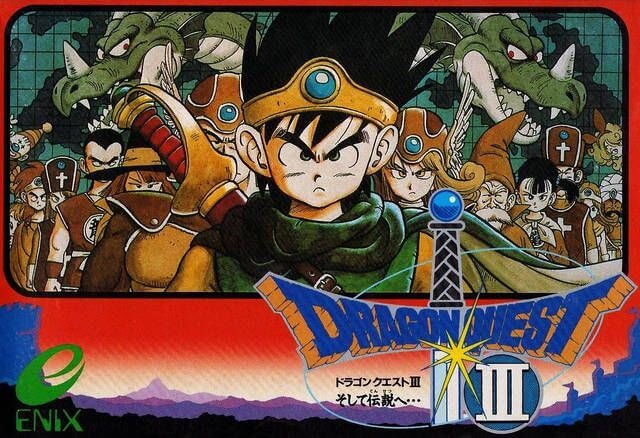
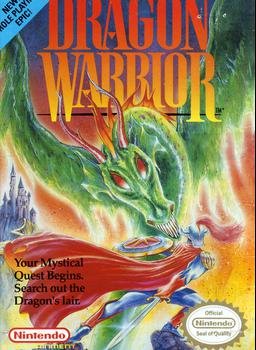
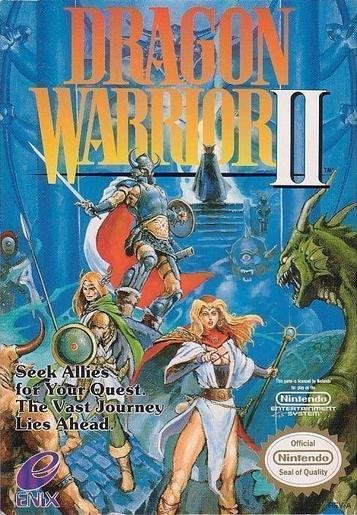
Dragon Warrior IV is particularly significant because it demonstrates how much the console RPG had evolved by the early 1990s. The original Dragon Warrior established the basic formula, while the second and third games expanded party mechanics and world exploration. Dragon Warrior IV takes another step by making character development and storytelling central parts of the experience.
For fans of classic NES RPGs, Dragon Warrior IV remains an essential title. Its chapter-based structure, memorable cast, merchant-focused gameplay, party system, strategic battles, expansive world, and ambitious storytelling make it one of the most distinctive role-playing games on the NES. It successfully combines the traditional mechanics of Dragon Quest with a much stronger emphasis on character and narrative, creating an adventure that remains historically important to the development of console RPGs.





No comments yet.