Street Fighter III 3rd Strike: Fight for the Future
About This Game
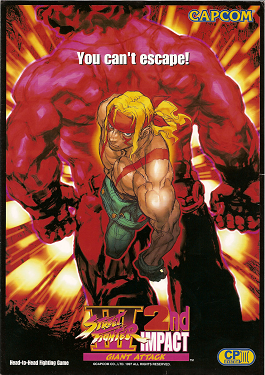
There are fighting games that define a generation—and then there are fighting games that quietly redefine what mastery looks like. Street Fighter III: 3rd Strike – Fight for the Future belongs firmly in the second category. Released by Capcom in 1999 as the final revision of Street Fighter III, it didn’t immediately dominate arcades the way Street Fighter II once did. Instead, it built a reputation over time, eventually becoming one of the most respected and technically demanding 2D fighters ever made.
The first thing that stands out is how different it feels from the Street Fighter II era. The roster moves away from many classic characters, focusing instead on a new generation of fighters like Alex, Yun, Yang, Ibuki, and Necro—while still retaining iconic figures like Ryu, Ken, and Chun-Li. This shift initially surprised many players, but it ultimately gave the game a unique identity. Each character feels highly specialized, with distinct strengths, weaknesses, and playstyles.
The defining mechanic of 3rd Strike is the parry system. Instead of blocking, players can tap forward (or down for low attacks) at the precise moment an attack connects to nullify damage and recover instantly. It sounds simple, but in practice it’s incredibly demanding. A successful parry requires timing, confidence, and prediction. High-level matches become psychological battles, where both players constantly test each other’s reactions and habits.
The parry system transforms the entire rhythm of combat. Fireballs, which once dominated neutral space in earlier Street Fighter titles, become risky if the opponent has sharp reactions. Jump-ins are no longer guaranteed pressure tools. Every action carries risk because it can potentially be parried and punished. This creates a uniquely tense atmosphere—every exchange feels meaningful.
Another key feature is the Super Art selection system. Before each match, players choose one of three different Super Arts for their character. Each option changes strategy significantly. For example, Chun-Li’s Super Art II (Houyoku-sen) became one of the most feared tools in competitive play because of its speed and confirm potential. Choosing a Super Art isn’t just cosmetic—it shapes how the character functions.
Visually, 3rd Strike is often considered one of Capcom’s 2D masterpieces. The sprite animation is incredibly detailed and fluid. Characters move with weight and personality, and the backgrounds are alive with subtle animations and cultural flavor. The art direction feels more mature and grounded compared to the brighter tone of earlier entries.
The soundtrack is another standout element. Unlike the rock-inspired themes of Street Fighter II, 3rd Strike embraces jazz, hip-hop, and experimental electronic sounds. It gives the game a distinct urban identity that still feels fresh.
Balance-wise, the game has its tiers—characters like Yun and Chun-Li are notoriously strong—but the depth of mechanics allows for creativity at every level. The skill ceiling is extremely high. Mastery requires not just execution, but mental strength and adaptability.
Over time, 3rd Strike became legendary in competitive communities. Iconic tournament moments helped cement its reputation as a game of precision and nerve. It rewards dedication like few other fighters.
Street Fighter III: 3rd Strike isn’t just another sequel—it’s a test of fundamentals, timing, and courage. Even decades later, it remains a benchmark for competitive 2D fighting game design.
Comments (0)



No comments yet.