Street Fighter III 2nd Impact: Giant Attack
About This Game
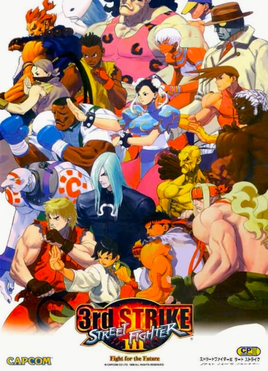
Street Fighter III: 2nd Impact – Giant Attack occupies a fascinating place in fighting game history. Released in 1997 as the direct follow-up to the original Street Fighter III: New Generation, it represents a transitional step—an experimental refinement that paved the way for the legendary 3rd Strike. While it’s often overshadowed by its successor, spending real time with 2nd Impact reveals a bold and creative fighting system that was still finding its ultimate form.
The foundation remains the same as the first Street Fighter III: a new generation of fighters replacing much of the Street Fighter II cast. Alex returns as the central figure, joined by Ryu and Ken as familiar anchors. However, 2nd Impact expands the roster with new additions like Hugo, Urien, and Akuma (Gouki), giving the game more variety and personality.
The most defining mechanic—introduced in New Generation and refined here—is the parry system. Unlike traditional blocking, parrying requires tapping forward (or down for lows) at the exact moment an attack connects. When successful, it negates damage and allows immediate retaliation. In 2nd Impact, parries already feel impactful and skill-based, though not yet as finely tuned as in 3rd Strike. Even so, they dramatically shift how matches unfold. Fireballs become risky, predictable pressure gets punished, and mind games become central to every exchange.
2nd Impact also experiments with the EX move system, allowing players to spend meter on enhanced versions of special moves. This adds flexibility to resource management. Do you save meter for a powerful Super Art, or spend smaller portions for safer pressure and combo extensions? That decision-making gives the game strategic depth beyond basic footsies.
Another major feature is the return of bonus stages—most famously the car destruction mini-game. It’s a nostalgic callback to Street Fighter II and adds a bit of arcade charm between serious matches. While not mechanically deep, it reinforces that 2nd Impact still carries some of that classic arcade spirit.
Visually, the game is already impressive. Built on Capcom’s CPS-3 hardware, it showcases detailed sprite animation that was ahead of its time. Characters move fluidly, with expressive idle stances and dynamic attack animations. Backgrounds are vibrant and alive, featuring animated crowds and atmospheric details that make each stage feel distinct.
Musically, 2nd Impact leans into a mix of upbeat and experimental themes. It doesn’t yet have the iconic urban jazz vibe of 3rd Strike, but it establishes a unique audio identity separate from the Street Fighter II era.
Balance-wise, the game still feels somewhat experimental. Certain characters and mechanics can feel rough around the edges, and competitive balance wasn’t as polished as it would later become. However, that experimental nature is part of its charm. It feels like a laboratory for ideas that would later be perfected.
Street Fighter III: 2nd Impact may not have the legendary tournament legacy of 3rd Strike, but it’s a crucial evolutionary step. It refined the parry system, expanded the roster, and deepened the meter mechanics. For players interested in the development of high-level 2D fighters, 2nd Impact is an essential chapter in the Street Fighter III story.
Comments (0)


No comments yet.