Demon's Crest
About This Game
Demon’s Crest is one of the most atmospheric and unusual action platformers on the Super Nintendo, and it stands out immediately for its darker tone and gothic world design. Developed and published by Capcom, it is actually a spin-off of the Ghosts ’n Goblins series, but instead of focusing on Arthur, it puts players in control of one of the series’ most iconic enemies: Firebrand, the Red Demon.
The story follows Firebrand after a series of conflicts in the demon world. He has gathered powerful magical crests that grant him different elemental abilities, but these artifacts are scattered and fought over by rival demons and corrupted forces. When the balance of power begins to collapse, Firebrand sets out on a journey to reclaim the crests and ultimately determine his own fate in a world full of betrayal, ambition, and dark magic.
What makes Demon’s Crest immediately different from most SNES platformers is its tone. Instead of bright fantasy environments, the game is filled with ruined castles, cursed lands, haunted towers, and bleak landscapes. Everything feels heavy and oppressive, reinforcing the idea that this is not a heroic journey in the traditional sense, but a struggle for survival and dominance in a hostile world.
Gameplay is built around exploration and ability-based progression. Firebrand can fly short distances, cling to walls, and attack enemies using fire-based projectiles. As he collects different crests, he gains new elemental transformations, each unlocking new abilities and access to previously unreachable areas. This structure makes the game feel closer to a Metroid-style experience than a traditional linear platformer.
Each form has a distinct playstyle. One transformation might focus on fire attacks, another on mobility, and another on defensive or magical abilities. Learning when and where to use each form becomes a core part of progression, especially when revisiting earlier areas to uncover hidden secrets or optional upgrades.
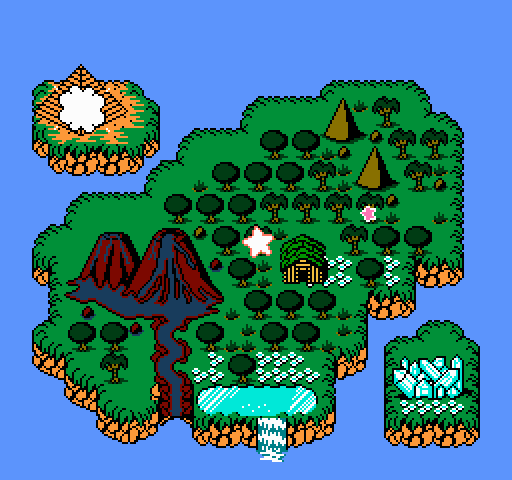
The world design is interconnected in a way that encourages exploration. Instead of simple level-to-level progression, Demon’s Crest allows players to move between regions on a world map, gradually unlocking new paths as abilities expand. This gives the game a sense of continuity and structure that feels more like a dark fantasy journey than an arcade-style platformer.
Combat is deliberate and strategic. Enemies are often placed in ways that require careful movement, and bosses frequently demand pattern recognition and patience. Firebrand’s attacks are powerful but limited, which means positioning and timing are just as important as raw offense.
One of the strongest aspects of Demon’s Crest is its atmosphere. The visual design is rich with gothic detail, from crumbling stone architecture to eerie skies and twisted creatures. The SNES hardware is used effectively to create moody lighting and strong environmental contrast, giving each area a distinct identity.
The soundtrack reinforces this tone with dark, haunting compositions that range from slow and ominous to more intense battle themes. Instead of trying to be upbeat or heroic, the music supports the game’s sense of isolation and tension.
Boss fights are another highlight. Many of them are large, intimidating creatures that require players to learn specific patterns and exploit weaknesses. These encounters often feel like duels between powerful beings rather than standard platforming obstacles.
What really makes Demon’s Crest stand out is its structure and ambition. It blends platforming, exploration, RPG-like progression, and transformation mechanics into a tightly designed experience. While it is not an easy game, it rewards careful observation and mastery of its systems.
Even today, Demon’s Crest is often considered one of Capcom’s most underrated SNES titles. It never reached the mainstream popularity of other platformers, but among fans of action games and gothic aesthetics, it remains a standout example of how far the SNES could be pushed in terms of mood, design, and gameplay depth.








No comments yet.